AUGUST 4, 2026
Following The Plants To Maolan: An On-Site Learning Program
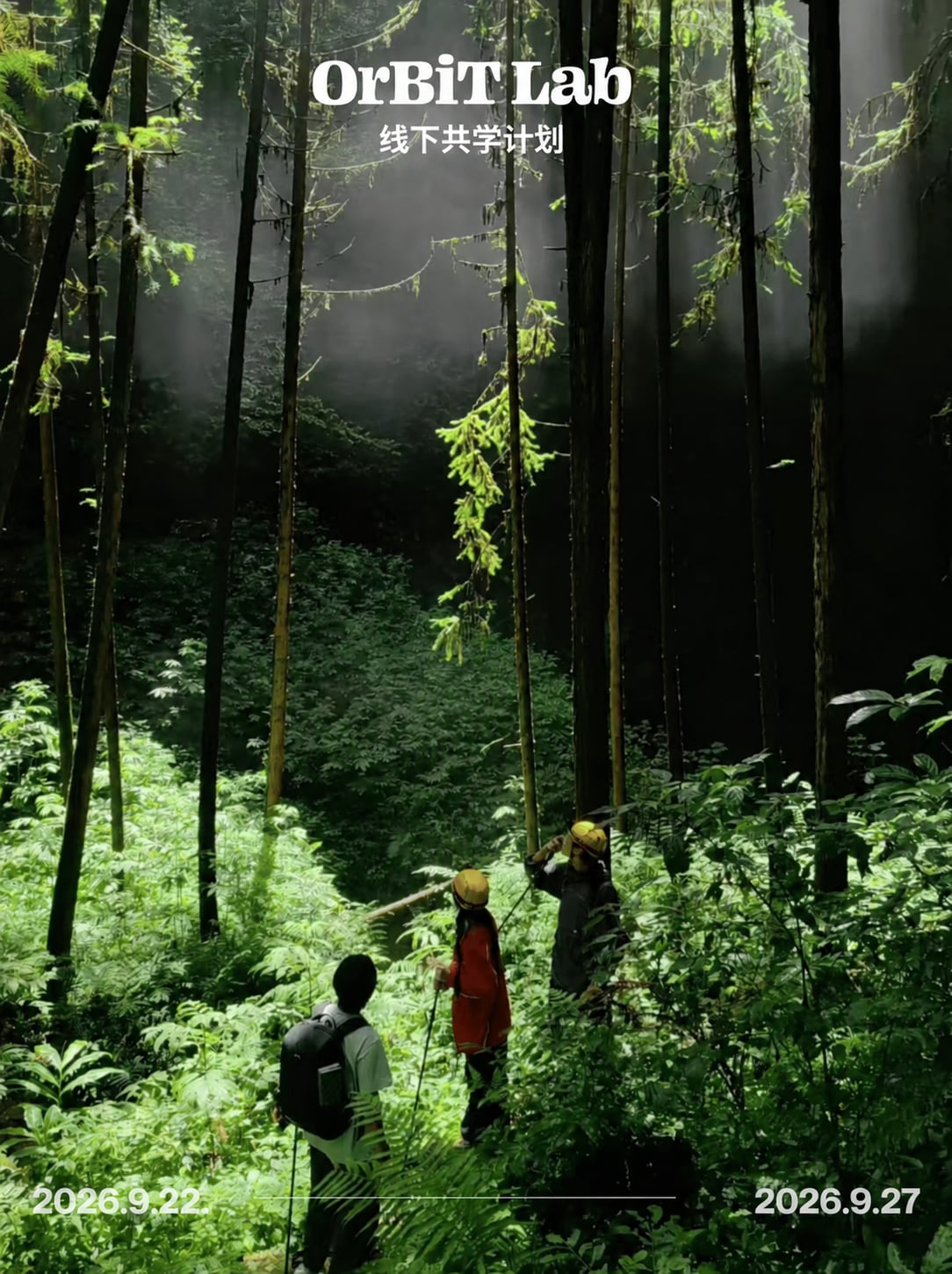
This programme treats plants as an epistemological medium: not as scenic backdrop to be observed, but as an active force capable of reshaping human modes of perception, temporal experience, and place-based connection. In Maolan, Guizhou—the only karst primeval forest ecosystem on the 25th parallel north—vegetal life does not merely “grow upon the earth,” but continuously generates the geological textures, hydrological veins, and ethnic memories of the entire mountain range.
For too long, plants have occupied the “margin of margins” within Western intellectual tradition. From Aristotle’s “nutritive soul” to modernity’s “plant blindness,” plants have been reduced to resources and passive existence. Yet the recent “vegetal turn” systematically overturns this legacy: Michael Marder proposes “plant-thinking,” pointing out that plants, through their heterotemporality—their synchronisation with light and seasonal rhythms—resist the logic of capital and technological acceleration at its root. Eduardo Kohn, in How Forests Think, argues that the forest itself is a vast semiotic network; thinking is not the monopoly of humans—trees, root systems, and rocks continuously exchange “living signs,” awaiting response from the next interpreter.
Italian philosopher Emanuele Coccia pushes this turn toward ontological depth. In The Life of Plants, he proposes that photosynthesis is a cosmological metaphysical event—through their leaves, plants transform light, air, water, and minerals into organic matter. This is not merely biochemical process, but the fundamental act of bridging “life” and “non-life.” Thus plants do not passively inhabit the world; they are the substrate that continuously generates the world itself. Coccia’s “metaphysics of mixture” reveals a decentralized, borderless mode of being: plant roots and leaves thoroughly intermingle interior and exterior, self and other, making “vegetality” a universal ontological principle. Every breath we take, every morsel we eat, confirms that humans cannot root alone—we always live within the relational web established by plants.
When banyan roots gnaw at limestone across decades, when ferns establish footholds in crevices, when moss weaves soft carpets in the shadows—these processes constitute a non-human “territorial intelligence,” waiting to be perceived anew.
Maolan is precisely the concrete site for entering this cognitive transformation. The Buyi, Shui, Yao, and Miao peoples have dwelled here for generations, believing that sacred trees, the Thunder God, and the Earth Mother are not deities ruling over nature, but nature’s very embodiment—human, divine, and material share a common origin and mutual resonance. Here, elders in their seventies still labour according to light and solar terms; their time shares the same rhythm as the plants. Modernization has not left this land untouched, yet mountain, stone, human, and plant maintain a stubborn, almost primal vitality.
For this reason, OrBiT Lab takes Maolan as its foundation and plants as its medium to launch a long-term field-based collaborative learning programme. We invite anyone willing to set aside existing conceptual frameworks and relearn through the body to enter these mountains. This is neither primitive nature worship nor regulated landscape consumption, but something in between—a semi-wild cognitive posture still in the making.
Methodology
This programme adopts a field-based, embodied pedagogy, emphasising the establishment of knowledge within real local-based conditions—rather than through detached texts or gallery spaces. Four methodological principles run through the entire programme:
Learning through the body. Knowledge is acquired through the complete execution of processes: hiking through primeval forest, probing canyon waterways by paddleboard, completing indigo dyeing from immersion to oxidation with one’s own hands, allowing materials to reveal their own forms in a sculpture workshop. Each process is fully carried out rather than merely demonstrated, enabling participants to directly experience the durations, material resistances, and bodily rhythms that constitute technique.
Situated dialogue. Each session is led by practitioners in their field: a Yao medicine lineage keeper identifying medicinal herbs and narrating the “plant covenant,” an indigo-dyeing master transmitting the craft of fermentation and binding, sculptors guiding creation through bodily perception of materials, and a local guide leading participants into the everyday fabric of village life. Dialogue centres on labour, provenance, seasonality, and collective organisation.
Iterative reading of terrain. The same valley will be read and re-read across six days, each time through a different medium and perspective, gradually transforming plants from “objects to be observed” into a grammar that can be sensed, operated, and imagined.
Collective reflection and co-creation. Each day closes with shared meals, circle conversations, and structured discussions, weaving individual experience into the programme’s theoretical framework. On the final day, participants will create a collage imagining their own dwelling “reclaimed by plants”—a synthetic response to the week’s accumulated perceptions.
Structure
Over six days and five nights, the programme uses Yaogu Village as its base, moving between forest, water, caves, markets, and artist settlements, following plants through a complete cycle from terrain-reading to bodily knowing.
Day 1. Arrival at Yaogu Village—Reading the Logic of Dwelling
Arrive in the afternoon and settle into the Buyi stilted architecture. Open the programme with a “terrain-reading”: walking village lanes to observe how stone paths, water channels, corner plants, and lotus ponds form an organic whole. In the evening, gather to share where each person comes from and what “wildness” means to them.
Day 2. How the Forest Thinks
A full-day hike into the Maolan primeval forest reserve. Between the folds of limestone and caves, read plants’ rooting strategies—how banyan roots gnaw rock, how ferns occupy crevices, how moss weaves soft carpets in shadow. Visit karst caves, pastures, and abandoned villages to observe both human survival strategies and how plants reclaim space after human withdrawal.
Day 3. Canyon Paddleboard Exploration—Dialogue of Water, Vegetation, and Underground Rivers
In the early morning, enter the canyon by paddleboard, following the water. Water is the soul of karst—it dissolves rock, sculpts caves, nourishes roots. Experience the invisible entanglement between plants and the hydrological system: lush forest above ground, rushing underground rivers below, the two forming an interwoven web of mutual shaping. Return to the village in the afternoon to learn indigo and tie-dye from a master craftsperson, understanding dye fermentation as a conspiracy between microbes and plants.
Day 4. The “Care” of Plants and Human “Grafting”
Morning: browse the local market, reading each stall as a cartography of bioregions. Experience an ancient divination practice that uses eggs as an honest medium between humans and nature. Afternoon: visit a Yao medicinal garden with a local expert to learn place-based botanical medicine and the “plant covenant.” Evening: shared meal and exchange with local ethnic-minority partners.
Day 5. Dongdao Community—Imagining through Creation and Labour
Travel to the Dongdao community to exchange with artists who have migrated here from cities, then enter a full-day creation workshop led by sculptors. Experience how they use plants as medium and terrain as canvas, letting art and plants collaborate and co-grow. This directly returns to Day 1’s inquiry into dwelling logic: if Day 1 was observing how the Buyi people have traditionally cohabited with mountain and water, Day 5 is participating in a contemporary, still-emerging experiment of dwelling—understanding how humans can once again graft themselves back into the valley through plants.
Day 6. A Blueprint for Your Own Dwelling
After five days of embodied learning, participants are invited to imagine their own living environment. Choose a familiar urban space—a balcony, a neighbourhood green strip, a cracked wall—and ask: if this space were reclaimed by plants, what would it look like? Using plant atlas clippings, moss and twig rubbings, indigo scraps, old maps, pigments, and brushes, complete a collage vision. Each person shares their piece: where is that space? From where would the plants emerge? What might this city grow into without human intervention? The programme concludes at 5 p.m.
Learning Facilitator
NESSA CUI — Curator and independent cultural producer. Her research explores individual circumstances and community ecology within everyday contexts, from agriculture, soil, and food to ritual and belief, attending to how humans, objects, and multiple species entangle and co-exist.
HUANG SHUO — Ecological artist and landscape designer, founder of SHUO STUDIO. Through interdisciplinary vision and the warmth of handcraft, he constructs miniature worlds within ecological installations that can be wandered through, sensed, and contemplated.
GUO QINGLI — Sculptor. He advocates suspending preconceptions and allowing intuition and bodily perception to grasp materials, gathering branches, stones, and scrap metal from nature so that forms emerge through the interaction between human and matter.
LI XIANG — Contemporary sculptor. Her practice balances sensuous intuition with spatial speculation, constructing open, healing fields between material narrative and audience perception, evoking deep emotional bonds between humans and objects through the minute and the tangible.
XIE YOUMING — Inheritor of a Yao medical lineage, Guizhou provincial inheritor of top-spinning heritage. He shares local botanical healing wisdom and the ancient “plant covenant.”
GRANDMA OU — Indigo and tie-dye craftsperson, transmitting the ancient craft of plant-based dyeing and the wild potential of fermentation.
AN YU — Founder of Cheng Ziran Guizhou Travel, with over two decades of bespoke deep travel in Guizhou. He provides local expertise and logistical support, guiding participants into the everyday fabric of village life.